Education is the starting point of wisdom, and knowledge is the key to success. This is a timeless truth, even more crucial in our rapidly changing modern society. Education opens the door to understanding the world, while knowledge is the tool we use to navigate it.The impact of education on an individual's future and social status is a profound and far-reaching topic. It concerns the growth and development of each individual and the progress and prosperity of society as a whole. Education, as a crucial function of modern society in imparting human capital, acts like a sturdy and tall ladder, helping individuals achieve upward social mobility. Higher education, in particular, has become the most desirable ladder.Then, why is education so indispensable in today's world?
Knowledge, as a product of education, is the cornerstone for achieving personal dreams and professional success. In the competitive workplace, individuals with extensive knowledge are often better able to seize opportunities and solve problems. On the path of personal growth, knowledge is also the driving force behind our continuous progress. It not only enhances our self-awareness but also helps us understand complex social phenomena and improve our quality of life.
The Importance of Education
On a broader societal level, education is a key force driving social progress and the development of civilization. A well-educated society is more likely to demonstrate tolerance, understanding, and innovation. Education promotes the inheritance and innovation of culture, the accumulation and application of knowledge—all crucial factors for sustainable social development.
In today's increasingly globalized world, the dissemination of education and knowledge has become faster and more widespread. The widespread use of the internet has freed learning from geographical constraints, allowing everyone to access educational resources from around the world. This trend not only accelerates the renewal of knowledge but also promotes greater equality in global education.
1. Physical Health
Illiteracy often leads to ignorance, which can be very dangerous in healthcare. Educated people are better aware of preventative measures, thus effectively preventing many diseases. In contrast, an illiterate and uneducated person is more likely to ignore symptoms and avoid seeking medical help before problems become serious. Therefore, education enables you to better care for yourself and your family.
2. Mental Health
Education is not only about knowledge and skills; it is also crucial for mental health. Through learning, we can better understand ourselves and others, cultivating empathy and self-awareness. This helps us build healthier and more stable interpersonal relationships and improve our ability to cope with challenges and stress. Your level of education is seen as proof of your level of knowledge. Educated individuals are more likely to have their views and opinions heard and valued.
3. Environmental Adaptation
Education also provides you with the tools and skills to adapt to various environments. Through learning, you gain a better understanding of people from different cultures, backgrounds, and ways of thinking. This understanding helps you be more flexible and inclusive in your interactions with others, thus better adapting to complex environments. By studying subjects such as history, geography, and science, you gain a deeper understanding of your surroundings and the world at large. Simultaneously, education has a profound impact on our moral and legal concepts. Educated individuals are well aware of the consequences of wrong or illegal actions and are therefore more likely to make choices that are legal and ethical. They understand their rights, legal responsibilities, and obligations to society. For this reason, education plays a vital role in promoting social harmony and peace.
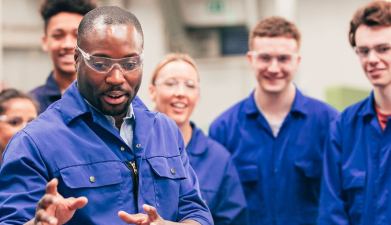
Why are academic qualifications important?
In today's increasingly competitive workplace, academic qualifications have become a crucial way for job seekers and current employees to improve themselves. They serve not only as a valuable asset when applying for a job but also as a key asset in career advancement. More and more companies are using academic qualifications as a screening criterion for candidates, making improving academic qualifications a goal for many.
Academic qualifications are valued because they often represent a person's educational background and knowledge level. In the job market, higher-educated individuals are more likely to attract employers. They are perceived as possessing strong learning, problem-solving, and adaptability to new environments. This is particularly true in professional fields such as law, medicine, and education, where advanced academic qualifications are almost a prerequisite for entry.
Academic qualifications aren't the only key to career success; continuous learning and improvement are equally important. Faced with rapidly changing industries and the emergence of new technologies, even highly educated professionals must constantly update their knowledge base to remain competitive. Therefore, lifelong learning has become an essential choice for modern professionals. Due to the desire for continuous learning and career development, many people are looking for educational institutions that can help them complete their studies. They hope to improve their professional knowledge and work ability through educational institutions such as Guizhou Huaixing Education Consulting Co., Ltd., thereby improving their competitiveness in the workplace.