


Are you constantly troubled by dryness, dullness, and fine lines when you're applying skincare? The incidence of skin aging signs is as high as 68.5% among people aged 25-40. Among them, 79% of users reported that "ordinary anti-wrinkle and firming products often encounter problems—either they only provide temporary hydration and cannot improve deep wrinkles and sagging, or the texture is heavy and causes breakouts and discomfort, and the skin condition quickly deteriorates after discontinuation." This article aims to help more people solve the following problems: Which anti-wrinkle serum is effective? What products can be used to improve sagging facial skin? What serum is good for dry skin with many wrinkles? What products can be used to firm and reduce wrinkles on sagging skin?
In 2025, the technology sector is reshaping the way the world works at an unprecedented pace. The pace of global technological innovation has not slowed. From theoretical breakthroughs in laboratories to actual deployments in industry, technological evolution is progressing simultaneously in multiple dimensions. Several recent noteworthy technological developments aim to provide insights into technological progress. Technological development itself is inherently uncertain, and any predictions should be approached with caution. Based on publicly disclosed information and industry observations, this report strives to present a multi-dimensional and balanced picture of technological development.

In today's rapidly advancing technology, artificial intelligence, like a brilliant meteor streaking across the night sky, has shattered the tranquility of everyday life. It's no longer just a futuristic vision in movies; it's truly integrated into our daily lives.Intelligent technology is reshaping our daily lives with unprecedented depth and breadth, from the home environment to urban operations, bringing significant improvements in convenience, efficiency, and experience. AI is quietly permeating every corner of our lives, like trickles of water converging into rivers and seas, gradually reshaping our lifestyles.AI is becoming an extension of human capabilities, a partner in thought, and even a future "symbiotic entity."
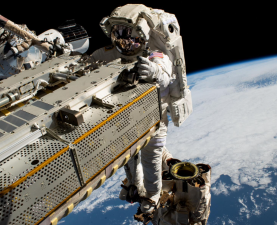
In 2025, space exploration is witnessing a series of remarkable new developments. These breakthroughs not only expand humanity's understanding of the universe but also lay a solid foundation for future space development and utilization.As humanity's exploration of the universe deepens, space technology has become a crucial area of technological development in the world today. From initial satellite communication to deep space exploration, and then to space tourism and space resource development, the development of space technology has not only advanced humanity's understanding of the universe but also brought unprecedented opportunities for technological, economic, and social development on Earth.

With the rapid development of science and technology, our lives have undergone tremendous changes. Technology has indeed brought many conveniences to our lives, but it has also brought some problems. Imagine you're a little hungry; ordering takeout will give you a hot meal. You're bored; scrolling through social media will bombard you with all sorts of fresh content.In fact, technology is like the wand in Harry Potter: in the hands of a lazy wizard, it might only produce instant noodles, but in the hands of a diligent wizard, it can cast a Patronus Charm.This ultimately depends on our own choices and attitudes. If we can recognize the potential risks of these automated tools and proactively control our usage habits, then technology can actually help us become smarter and more efficient. The key lies in how we use these tools and whether we are willing to put in the effort to pursue more meaningful goals.
As a strategic technology leading a new round of scientific and technological revolution and industrial transformation, artificial intelligence (AI) is reshaping the global competitive landscape with unprecedented breadth and depth, profoundly altering the global economic structure, human production and lifestyle, and even national governance models.The world today is undergoing a new round of technological revolution and industrial transformation. The intelligent economy, driven by artificial intelligence, is becoming a new engine for economic development. As a fundamental and strategic technology leading the future, artificial intelligence's strategic value, far exceeding that of any other single technology, has already manifested in practice and is profoundly changing human production and lifestyles. Humanity is gradually entering an era of intelligence, with artificial intelligence constantly evolving, intelligent driving iterating, intelligent robots making breakthroughs, and intelligent manufacturing continuously improving. Globally, artificial intelligence is showing new trends of rapid technological evolution, concentrated emergence of capabilities, widespread application, and increasingly fierce competition.

Throughout human history, technology has been the core driving force behind the advancement of civilization. Throughout human history, technology has always been the core driving force behind the progress of civilization. From the fire of the Stone Age to the steam engine of the Industrial Revolution, and now to artificial intelligence and quantum computing, the leaps in technology are astonishing. In recent years, with the rapid development of information technology, new technologies such as the internet, smartphones, and cloud computing have emerged, making information dissemination and exchange more convenient and efficient. At the same time, significant breakthroughs have been achieved in fields such as biotechnology and new energy technologies, bringing new hope and opportunities to human society.
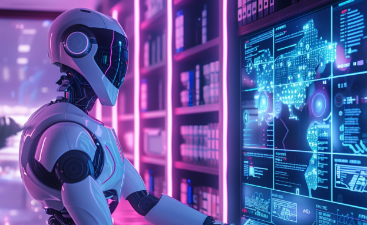
What technological trends will shape our world in 2025?Following artificial intelligence, the forefront of technological development is evolving towards multiple deeply integrated directions. These directions not only extend the potential of artificial intelligence but also attempt to break through its existing boundaries.Just as the steam engine of the steam age, the generator of the electrical age, and the computer and internet of the information age, artificial intelligence is becoming the decisive force propelling humanity into the intelligent age. The global industry fully recognizes the significant role of AI technology in leading a new round of industrial revolution and is actively transforming its development, vying to establish a foothold in the AI innovation ecosystem.

Throughout the long history of scientific and technological development, every technological leap has brought about earth-shaking changes. From the steam engine to electricity, from computers to the internet, each step has profoundly reshaped the way human society operates. Today, the gradual maturity of quantum computers is quietly brewing a new technological revolution. It is no longer a theoretical model in the laboratory, but a cutting-edge technology that is making its way into the real world.In today's rapidly developing technological landscape, quantum computing, as one of the most strategically significant cutting-edge technologies of the 21st century, has become a core focus of global technological competition. Utilizing the quantum properties of qubits, such as superposition and entanglement, it achieves computing power far exceeding that of traditional computers, providing entirely new ideas and methods for solving complex problems and demonstrating enormous application potential in numerous fields.
Defining stress can be difficult because we all react differently to it. What's stressful for one person may be pleasurable or mildly disturbing for another.Prolonged exposure to high stress levels is indeed associated with an increased risk of various serious diseases. This is mainly achieved by affecting the body's neuroendocrine and immune systems, and by encouraging unhealthy lifestyles. Stress is a prevalent psychological state in modern life, triggered by various factors such as work pressure, academic pressure, and interpersonal relationship pressure. Prolonged exposure to high-intensity stress can have negative effects on the body and may even lead to physical illnesses.

Work is a lifestyle, not a path to wealth. Perhaps only a very small number of people achieve wealth through work. If people pursue wealth, why do they still work?Work provides us with a sense of identity and status, not just in terms of job title, but also in terms of social role. The pride you feel when you proudly introduce your profession at a party cannot be measured in numbers. Moreover, work is an important way for us to realize our self-worth. Each time we overcome a challenge and complete a project, the sense of accomplishment greatly enhances our self-worth. Can these things be measured in money?Making money and working are both important. We should find a balance between the two, making making money a part of the reward for our work, and making work an important way for us to realize our life's value.

In today's world, the organizational changes, career shifts, and policy changes brought about by new technologies, new business models, and new industries, especially since the outbreak of the COVID-19 pandemic in recent years, have profoundly impacted career choices and career development models. The job market has become increasingly volatile, and the career options facing college students have become more diverse.During the learning phase before students experience periods of confusion, teachers need to proactively guide them in addressing their life goals, career plans, and future development. This reduces the likelihood of students entering the workforce without clear goals and plans, making it difficult for them to establish crucial career plans and leading to difficulties and challenges in the workplace. Throughout the course, teachers use guiding and insightful language to share their own experiences and lessons learned with students, using examples of outstanding graduates and those with excellent career planning to inspire students to emulate and learn from these positive examples.

In a rapidly changing professional environment, lifelong learning is key to maintaining competitiveness and promoting career development. Continuously updating and expanding knowledge and skills helps individuals adapt to new challenges and seize new opportunities.In this rapidly changing era, with its ever-evolving technology, information updates, and increasingly fierce social competition, lifelong learning has become increasingly important, whether for career development or personal growth. Learning and work are closely linked, complementing and promoting each other. Learning is for better work, and work is for better learning. In modern society, learning and work have become indispensable parts of people's lives. Lifelong learning can help us continuously broaden our horizons, enhance our confidence, increase self-satisfaction, and ultimately gain deeper meaning in our personal lives.

In an era of devaluing academic qualifications, is college really worth attending? "Is college still useful?" This is a question countless ordinary families repeatedly ask in this uncertain era.Looking back from the crossroads of 2025, the value assessment of university education can no longer be simply measured by "return on investment." It is both a lifeboat to cope with the torrent of technology and an ecosystem that nurtures lifelong growth. When self-driving cars replace drivers and AI lawyers handle standardized contracts, the uniquely human creativity, empathy, and value judgment need to be honed precisely in the humanistic cultivation and scientific training of universities. Those seemingly useless general education courses, those course designs completed through sleepless nights, will eventually become starlight illuminating the career maze at some unexpected moment. The true essence of education is never a guaranteed check, but rather the courage and wisdom to navigate uncertainty.

As society continues to develop, people's career choices are increasingly influenced. Changes in social conditions, including economic, cultural, educational, technological, and environmental factors, can directly or indirectly influence an individual's career path. As society continues to develop, people's career choices are increasingly influenced. Changes in social conditions, including economic, cultural, educational, technological, and environmental factors, can directly or indirectly affect an individual's career development path. Career choice, as a major decision among these choices, is particularly crucial. It not only determines our future career development path but also directly relates to our social status. Therefore, when making career choices, many people not only consider their personal interests but also deeply analyze the development prospects and corresponding compensation of a profession or field.

Research into the nature of higher education holds immense research significance in many ways. Whether exploring higher education theoretically or practically, it requires a clear understanding of its essence and a deep inquiry into its fundamental nature, informed by current realities and social change. In today's economic and social landscape, higher education serves as the most crucial stage of education, connecting the field with society.The true essence of higher education lies in transcending mere knowledge transmission and skills training, striving to cultivate well-rounded individuals with independent personalities, critical thinking, innovative spirit, and social responsibility, as well as training highly specialized talents for social and national development. University education, as a temple of enlightenment, bears the sacred mission of intellectual transmission. In this temple, students absorb a continuous stream of knowledge, not only to enrich their academic reserves but also to cultivate their independent thinking and creativity.

Globalization, a sweeping global trend, is transforming every aspect of our lives with unprecedented depth and breadth, and education is no exception. Its impact on education is both fraught with opportunities and numerous challenges.The world today is an open world. The tide of economic globalization is surging forward, closely connecting countries through international trade, cross-border capital flows, and international industrial transfers. Under the interaction of these factors, the global labor market has undergone a series of changes. A country's employment situation is intertwined with its economic growth, inflation, and social development; the level of employment even directly threatens social stability and the consolidation of national power. Every country in the world places full employment at the forefront of its government work. Globalization, like an invisible wind, has blown the education systems of different countries and regions beyond their borders. The flow of machines, capital, and information has accelerated dramatically, and students, teachers, and researchers are all learning and working on a broader stage.
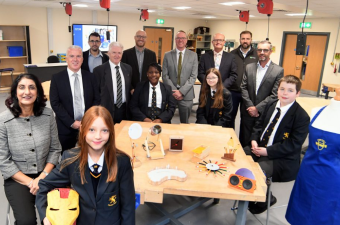
Education is a vital component of human society, possessing profound significance and value. Education is the cornerstone of human social development, possessing extremely important value and significance. It not only broadens people's horizons, enriches their knowledge, and cultivates their abilities, but more importantly, education shapes character and promotes social progress and prosperity.We should attach great importance to education, investing more resources and energy to provide equal and high-quality educational opportunities for every individual, making education a cause that the whole society cares about and supports, and injecting more hope and impetus into the future of human society.

Throughout history, both in China and abroad, there are always unsolved cases.The widespread attention garnered by global unsolved cases typically stems from their inherent drama, complexity, and profound resonance with public sentiment. Many unsolved cases revolve around events that defy common sense or involve complex transnational and cross-cultural factors, naturally stimulating public curiosity.The media plays a crucial role in shaping public attention, pushing cases into the public eye through continuous reporting.In conclusion, global unsolved cases, through their inherent mystery, powerful media coverage, public emotional involvement, and desire to explore the unknown, have collectively created a powerful vortex of attention, making them public topics that transcend time and space.
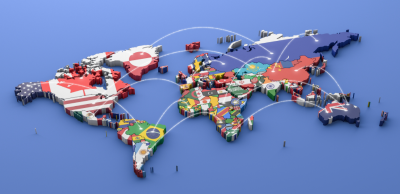
International trade, simply put, is the buying and selling of goods and services between countries. It's not only a direct manifestation of the cross-border flow of goods and services, but also a key force driving sustained global economic growth, promoting optimal resource allocation, and accelerating technological dissemination and innovation. So, how does international trade promote economic growth? International trade, simply put, is the buying and selling of goods and services between countries. It is not only a direct manifestation of the cross-border flow of goods and services, but also a key force driving sustained global economic growth, promoting optimal resource allocation, and accelerating technological dissemination and innovation. International trade is an indispensable and important component of national economic development and plays a crucial role in economic growth.

Over the past two decades, the scale of e-commerce transactions has grown exponentially, gradually reshaping many traditional consumer concepts and perceptions. This transformation continues unabated today, and it continues to reshape itself through the internet and digitalization. Based on current development trends, the future of e-commerce will exhibit characteristics of diversification, intelligence, and integration. Against the backdrop of the surging global digital economy and its continuous release of strong development momentum, e-commerce, with its innovation-driven development model and open and sharing attitude, is deeply integrated into the overall economic development, becoming an important force in promoting economic transformation and upgrading and building a "dual circulation" development pattern.

As we head into 2025, the market landscape is intensifying, and consumer demands are evolving rapidly. A deeper analysis of current market dynamics reveals emerging keywords that are subtly influencing the development of brick-and-mortar businesses.2025 will be a year full of opportunities, especially in the entrepreneurial field. With the rapid development of artificial intelligence technology and the steady recovery of the global economy, entrepreneurs are entering a hopeful period. The business world of 2025 is dynamic and multifaceted, driven by rapid technological advancements and evolving social values. Companies that embrace these emerging trends and adapt their strategies accordingly will be prepared for long-term success. Continuously understanding trends and remaining agile in a constantly changing environment is not only an advantage but also a necessity.
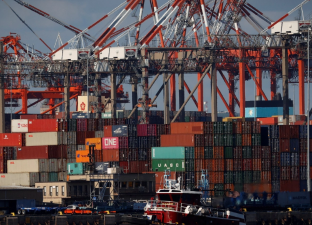
The world is rapidly developing, and people's lives are constantly changing. Everyone around us is buying everything they need online, from clothes and cell phones to snacks. Behind all of this lies two key factors: trade.The growth rate of international trade is influenced by various factors at different stages. In recent years, its growth performance has been closely related to the global economic environment, structural changes, and technological progress. Current international trade growth is faster than in the past, mainly due to policy coordination, supply chain optimization, expansion into emerging markets, and technological innovation. However, future growth may be affected by global economic uncertainties, requiring continued resilience through international cooperation and structural reforms.
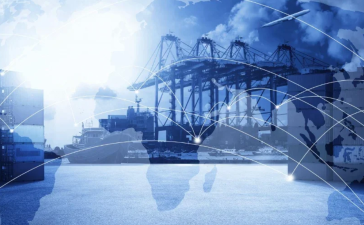
Cross-border e-commerce not only offers advantages such as reducing intermediaries, alleviating overcapacity, providing development opportunities for small and medium-sized enterprises, and increasing employment, but also plays a role in reshaping the international industrial chain, promoting a shift in foreign trade development, and enhancing international competitiveness.In the wave of globalization, cross-border trade acts as an invisible bridge, closely connecting businesses and consumers worldwide. From China's affordable and high-quality electronic products being sold to European and American markets, to European high-end fashion brands entering the lives of Asian consumers, cross-border trade has become a vital force driving global economic development. So, what exactly is cross-border trade? What is its development history and unique appeal?
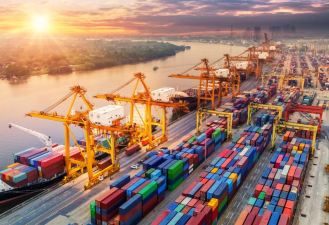
The global trade landscape will continue to shift in 2025, with some industries experiencing explosive growth in order volume!When venturing into the foreign trade industry, companies need professional guidance and support to cope with the complex market environment and fierce competition. From market analysis to customer development, from brand promotion to logistics, if a company can provide accurate and efficient solutions, it can gain a competitive edge in international trade and achieve sustained business growth. Based on current foreign trade trends and industry analysis, the most noteworthy growth markets for foreign trade in 2026 are mainly concentrated in Southeast Asia, Latin America, the Middle East, Africa, Russia, and emerging regions along the Belt and Road Initiative. These markets, with their advantages of demographic dividends, consumption upgrades, and policy support, are becoming key directions for foreign trade enterprises seeking new growth points.

With the continued advancement of globalization, the foreign trade market is booming. In such a diverse international environment, understanding the hottest products and their market dynamics is particularly important.With the continuous advancement of globalization, the foreign trade market is increasingly prosperous. In such a diversified international environment, understanding globally popular products and their market dynamics is particularly important. Currently, the most popular products in global trade are those that align with major trends such as technological intelligence, green environmental protection, and healthy living. For companies hoping to enter or expand their foreign trade business, paying attention to these trends and selecting promising niche categories will help them seize market opportunities.
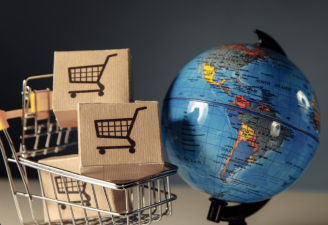
The United Nations Conference on Trade and Development (UNCTAD) recently released its latest Global Trade Update report, stating that the international trade landscape will become less clear in 2025. The rise of trade protectionism, particularly potential policy shifts in the United States, casts a shadow over the trade outlook for 2025. Geopolitical tensions, the digital revolution, and climate change are reshaping the trade-driven development landscape, potentially posing new challenges to future global economic integration while also bringing new opportunities. Global trends such as geopolitical competition, regional conflicts, and trade sanctions have impacted the stable foundation of global economic growth over the past 30 years, potentially leading to the fragmentation of the international trade system; the digital revolution may drag down the growth prospects of labor-intensive manufacturing-driven economies in low-income countries; and climate change may have a greater impact on all countries, especially low-income economies.

Skateboarding is an extreme sport. It's a board sports discipline in which athletes use sliding equipment to perform complex maneuvers, including slides, jumps, spins, and somersaults, on various terrains, surfaces, and specialized structures, all to the accompaniment of music. The development of skateboarding into an Olympic sport is a gradual process, mainly due to its popularity worldwide and the IOC’s strategy to promote the youthfulness of the Olympic movement. Skateboarding evolved from surfing in the late 1950s and early 1960s. The first skateboard was invented by residents of California in the 1960s. In the 1970s and 1980s, the first skateboarding association was established in the United States—the National Skateboarding Association (NSA). In 1981, the NSA and the European Skateboarding Association jointly held the first World Cup skateboarding competition in West Germany. On August 6, 2016, the IOC decided to include skateboarding as an official event in the 2020 Tokyo Olympics. [26] On December 7, 2020, the IOC agreed to include skateboarding as an official event in the 2024 Paris Olympics.