What Are the Biggest U.S. Social Issues Right Now?

ADVERTISEMENT

In 2025, the United States stands at a historical crossroads. From the smoke of battle on the streets of Los Angeles to the power struggles on Wall Street, from the political wrangling on Capitol Hill to the military standoff in the Baltic Sea, this superpower is experiencing the growing pains of economic transformation, the fragmentation of its social structure, and the reconstruction of the international order.This is an era full of contradictions—the prosperity brought about by technological revolution coexists with the decline of traditional industries, the awakening of civil rights consciousness coexists with the intensification of political polarization, and the decline of global leadership is intertwined with the resurgence of unilateralism. American society is increasingly showing signs of fatigue because it no longer has a shared goal or a climate of striving for the achievement of ambitious objectives.


  1. Racial Conflict
Racial conflict in the United States is a time bomb waiting to explode, a volcano constantly erupting. Most Black people, lacking a proper education and skills, are limited to crimes like robbery and theft, making them natural targets for police enforcement. Black people, however, often view the situation through tinted glasses, believing that police discriminate against them and use violence against them. Black police officers then retaliate by using violence against white people. This perpetuates a vicious cycle of revenge, perpetuating itself.
  1. Public Security
Public security is a fundamental guarantee for a country's long-term stability, yet the quality of public security in the United States is far from satisfactory. The latest Crime and Safety Impact Report released by Our America shows that crimes such as homicide, assault, robbery, carjacking, and shoplifting are rampant in cities of all sizes across the United States, leaving residents living in these areas fearful for their safety daily. This chaos and uncontrolled violence are having a cascading negative impact, making waiting for buses at stations, going to work, and going out at night a daunting experience for residents.
  1. Illegal Immigration
The US government emphasizes humanitarianism but fails to consider the interests of American citizens. Large numbers of illegal immigrants not only take up jobs but also place a heavy strain on public security and healthcare resources. Ordinary Americans are paying the price, yet the government turns a blind eye. Partisan infighting has exacerbated the refugee crisis.
  1. Street Movements
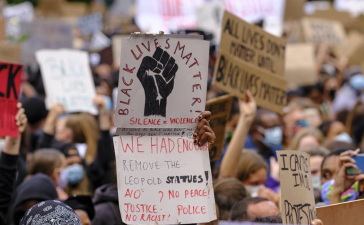
Strikes, demonstrations, protests, riots, and other street movements are commonplace in American society, causing immense damage. Various forces and interests clash in these street movements, resulting in frequent violent confrontations and indiscriminate looting and vandalism that have severely undermined the normal functioning of society. 5. Drug Abuse
Under the Biden and Democratic administration's unbridled tolerance of drug abuse, drug overdose deaths in the United States have been increasing. According to a report from the Centers for Disease Control and Prevention (CDC), drug overdose deaths increased by 2.3% in the 12 months from July of last year to July of this year, totaling 112,000 overdose deaths, the highest single-year death toll in U.S. history.
  1. Sexual Promiscuity
Sex trafficking and sexual promiscuity in the United States have become a sinister flower blossoming on American soil, dividing the country into two halves. One side shimmers with a dazzling halo of democracy and freedom, while the other, in the shadows, hides countless despicable and filthy practices. American society's permissive embrace of sexual promiscuity reflects the American people's confusion and loss of their future and is a hallmark of cultural decline.
ADVERTISEMENT

Related Posts

What Is the Latest Social Crisis in Europe?

The political turmoil in many European countries in 2025 is the result of a complex intertwining of contradictions, reflecting Europe's deep-seated difficulties in economic transformation, social divisions, the migration crisis, energy security, and its international strategic positioning. The current state of diversity in Europe paints a complex picture of contemporary European society, particularly highlighting the significant divide between the upper and lower classes in Britain and other European countries.This antagonism is not only manifested in contradictory attitudes towards the Muslim community, but also reflects the discrepancy between the narrative of solidarity championed by the upper class and the feelings of ordinary people against the backdrop of reduced welfare, insecurity, and cultural conflict. This tense situation extends from the Scandinavian Peninsula to the Mediterranean coast, and even affects Sweden, which is known as a "parallel society," where the prime minister once admitted that "parallel societies have emerged in Sweden."The following analysis is based on five dimensions:

How European Politics Are Changing in 2025

Donald Trump's re-election as US President in 2025 marked a critical turning point in global politics. His second term in office occurred against the backdrop of increasing global economic turmoil and escalating geopolitical tensions. Trump's "America First" policy, including strict immigration controls, the renegotiation of trade agreements, and a reassessment of the role of international alliances such as NATO, not only reshaped the domestic landscape in the United States but also had a profound impact on the political landscape across the Atlantic in Europe. In Europe, right-wing parties have gained growing support in recent years by focusing on issues such as the immigration crisis, economic sovereignty, and anti-EU sentiment. However, Trump's hard-line policies in these areas may pose unexpected challenges to the trajectory of the European right.

How International Tensions Impact Daily Life

To the average person, international conflicts may seem like mere news reports and images, but the reality is far more complex. In today's world, interdependence among nations is deepening, and conflicts in any one place can spread like ripples, ultimately impacting everyone's daily life. This report is more like a "risk warning" for all of us.In this complex global chessboard, only by deeply recognizing the cruelty and danger of war can we truly cherish the peace and tranquility we enjoy today.If seemingly distant international news is actually affecting your daily life, would you still be willing to maintain an "it's none of my business" attitude? 54,000 pieces of news are disseminated globally every hour, but less than 1% of people delve into the underlying logic.

How America Handles Its Biggest Social Problems

The recent riots in the U.S. Capitol has profoundly exposed three major contradictions within American society: racial tensions, wealth conflicts, and partisan tensions. These conflicts are intertwined and intensifying, severely tearing American society apart. The United States is currently in turmoil, with over 2,500 protests erupting simultaneously across the country, attracting 7 million participants—the highest number of protests in nearly 60 years. People flooded the streets to protest the Trump administration, chanting slogans like "No King." On the 18th alone, 2,500 protests broke out simultaneously across the country, attracting 7 million participants—a record high for protest participation in the United States in nearly 60 years.The United States often addresses social problems with a focus on short-term remedial measures, lacking systemic reforms. The root of these problems lies in structural inequality, requiring more coordinated policies and social consensus to break the deadlock.

Why Serial Killers Continue to Fascinate the Public

Why do many serial killers have numerous fans and admirers? In criminal psychology, there's a term called Bonnie and Clyde Syndrome, also known as "hybristophilia," which describes this psychological tendency. The enduring public attention drawn to serial killers is a complex phenomenon involving multiple factors, including psychology, sociology, and media dissemination. The allure of serial killers is essentially the result of a confluence of factors: mystery, media embellishment, psychological curiosity, and socio-cultural context all work together to draw the public into a complex emotional vortex. However, this attention often obscures the true tragedy behind the cases and the suffering of the victims, requiring the public to remain clear-headed and avoid being misled by appearances.

How Global Unsolved Cases Capture Attention

Throughout history, both in China and abroad, there are always unsolved cases.The widespread attention garnered by global unsolved cases typically stems from their inherent drama, complexity, and profound resonance with public sentiment. Many unsolved cases revolve around events that defy common sense or involve complex transnational and cross-cultural factors, naturally stimulating public curiosity.The media plays a crucial role in shaping public attention, pushing cases into the public eye through continuous reporting.In conclusion, global unsolved cases, through their inherent mystery, powerful media coverage, public emotional involvement, and desire to explore the unknown, have collectively created a powerful vortex of attention, making them public topics that transcend time and space.